
News & Updates
Follow Huiyunda for the latest updates and industry insights

Huiyunda partners with 17TRACK carrier now live
Huayunda has officially partnered with 17TRACK. The collaborating carrier is now live. Leveraging both parties' strengths, we provide cross-border customers with more reliable logistics fulfillment and real-time tracking visibility, continuously enhancing the cross-border shipping experience.

US-China Port Fee Moratorium Ends: Global Liner Industry Faces Cost Restructuring (Outlook)
The U.S.-China agreement to suspend reciprocal port fees for one year, effective 2025/11/10, will expire on 2026/11/9. If no new long-term arrangement is reached by then, the global liner shipping industry could face billions of dollars in cost restructuring pressures. Shipping lines may need to significantly adjust their fleet deployment, route planning, and pricing strategies. Foreign trade companies should closely monitor policy developments and prepare for potential fluctuations in logistics costs.

Panama Canal tolls hit record high of $0 million; Middle East route rates exceed 10,000 yuan.
Amid escalating tensions in the Middle East and a powerful El Niño event, the Panama Canal faces a new "transit crisis," with auction prices for single-pass quotas surging to a record 530 million USD. Meanwhile, freight rates for 140-foot containers on Middle East routes have broken through the 10,000 yuan threshold. Major routes to the Middle East and U.S. East Coast are seeing broad rate hikes, with full-shipload rates jumping sharply. In 2026, autumn freight rates remain at elevated levels, significantly increasing shipping costs for shippers.

BDI index up 46% year-over-year; Panama Canal draft restrictions tightened.
As of 2026 8, the BDI reached 2453.99 points, up 46.0% year-over-year, signaling a potential start to the dry bulk shipping cycle. Meanwhile, starting 8 26, the Panama Canal Authority reduced the maximum draft for Neopanamax vessels to 48 feet and plans further tightening in 9. With constrained capacity and recovering demand, dry bulk market sentiment continues to rise.

MSC officially announces phased resumption of Red Sea shipping; 5 main vessels reroute via Suez Canal.
On 8 24, Mediterranean Shipping Company (MSC), following a comprehensive and prudent assessment of the security situation, maritime risks, and overall operating conditions in the Red Sea region, officially announced the phased resumption of shipping services through the Red Sea. Partial restoration of traditional routes via the Suez Canal and the Red Sea has been implemented on limited east-west trunk lines, with an initial deployment of 5 main vessels representing over 9 thousand TEU of capacity. This marks the official return of the world's largest container shipping company to the Red Sea corridor.

Ningbo Zhoushan Port launches weekly China-Europe Arctic Express, reducing Asia-Europe transit time to 20 days.
On 8 15, Ningbo Zhoushan Port officially launched weekly operations on the China-Europe Arctic Express route, reducing one-way transit time between Asia and Europe to 20 days. This marks a significant breakthrough in the commercial operation of Arctic shipping routes by Chinese ports, offering an alternative to traditional Red Sea/Suez Canal routes and signaling a clear acceleration in the deployment of Northeast Asian shipping entities along the Arctic corridor.

Global Liner Giants Launch "Red Sea Resumption Wave"
Since 2026 and 7, global shipping giants including Maersk, Hapag-Lloyd, CMA CGM, and Mediterranean Shipping Company (MSC) have resumed multiple Suez Canal–Red Sea routes and sailings, initiating a planned return to Red Sea operations. This marks the global shipping industry's gradual shift toward balancing channel safety with transport efficiency after prolonged diversions, signaling a potential phased recovery of the global supply chain landscape.

Europe lane peak season surcharge kicks in; US lane rates surge over 30% in a single month.
As 6 arrives, the Europe and US trade lanes enter their traditional peak season. The Europe lane will impose a PSS peak season surcharge starting from 6/10, while US lane rates have surged by over 30% in a single month. Driven by combined factors such as World Cup inventory buildup and early Amazon Prime Day stocking, US cabin capacity has been fully booked 12 days in advance. With clear signs of peak season activity in the shipping market, foreign trade enterprises must secure cargo space promptly and strengthen cost control.

US-Iran talks collapse; US Navy blocks all Iranian ports
On 4/13, tensions between the U.S. and Iran escalated further as U.S. forces imposed a blockade on key Iranian ports, sharply increasing shipping risks in the Strait of Hormuz. As a critical global energy corridor, developments in the Strait will directly impact oil, natural gas, and bulk commodity shipments, driving up marine insurance premiums, rerouting costs, and schedule uncertainty. Global energy markets and supply chains must brace for potential short-term volatility.

U.S.-Iran military clash erupts; Strait of Hormuz threat level raised to maximum
On 3/1, shipping risks in the Strait of Hormuz escalated further. As one of the world's most critical energy transit corridors, developments in the Strait directly impact oil, natural gas, and related commodity shipments while driving up marine insurance premiums, detour costs, and schedule uncertainty. The global shipping market is now in a highly sensitive phase; energy companies, cargo owners, and logistics providers must closely monitor channel safety and supply chain risk changes.

Trump's tariff policy emerges as the biggest disruptor in global maritime shipping
In 2025, the global shipping industry will continue to face multiple challenges, including long-term tariff policies, geopolitical shifts, and supply chain restructuring. Adjustments in U.S. maritime fees on Chinese goods, strengthened trade barriers in Europe, and rising risks along key shipping routes are increasing uncertainty in global ocean freight costs. Foreign trade enterprises and logistics providers must proactively prepare by optimizing route selection, refining cost calculations, updating order quotations, and enhancing risk early-warning systems.

Global ocean freight rates surge against the odds, covering over 70% of all routes.
Entering 11, the Asia-Europe trade lane sees a new wave of freight rate hikes. Major carriers including CMA CGM, Hapag-Lloyd, and Mediterranean Shipping Company (MSC) have announced increases to the FAK base rates on the Asia-Europe route effective 15 of 11. This price adjustment reflects both carriers' efforts to address sustained low-rate pressures and the seasonal demand surge in Q4, directly impacting booking costs, order quotations, and shipping schedules for European exporters.

Asia-Europe trade lane sees rate hikes; multiple carriers increase FAK rates starting 11/15.
As 11 begins, the Asia-Europe lane enters a peak pricing window. CMA CGM, Hapag-Lloyd, MSC, and other leading carriers have collectively announced FAK base rate increases. Carriers are leveraging Q4 seasonality to reverse prolonged weak market rates. European-bound exporters should strengthen cost control and optimize shipment planning.

China and the US announce a one-year suspension of mutual port fees starting from 11/10.
The US and China have reached an agreement to suspend mutual port surcharges for one year starting from 11/10. This will temporarily ease cost pressures on trans-Pacific shipping routes. However, as this is a temporary measure, the industry still faces the risk of cost restructuring after one year. Foreign trade companies should continue to develop long-term risk mitigation plans.

The U.S. 301 tariff is officially in effect; China imposes a special port fee on the same day in response.
Following the implementation of U.S. "301" investigation-related tariffs, China has taken reciprocal measures by imposing special tariffs on select U.S. imports. These bidirectional policy adjustments will impact shipping costs, port logistics, and supply chain expenses between China and the U.S. Foreign trade enterprises should closely monitor changes in tariff lists, transportation costs, and order pricing.

U.S. announces fee measures for "301" investigation on China's maritime sector; each Chinese vessel could face $1 million
The U.S. Department of Commerce announced a "301" investigation into maritime services from China and other countries, focusing on cross-border shipping rates, port handling, and cargo clearance. If additional maritime service fees are imposed or restrictions are implemented, logistics costs for Chinese exporters to the U.S. will rise significantly, particularly affecting industries such as home appliances, furniture, machinery and electronics, and apparel.

Maersk and Hapag-Lloyd's "Twin Star Alliance" officially launches, reshaping the global shipping landscape
The newly operational "Twin Star Alliance," formed by Maersk and Hapag-Lloyd, marks a new phase of adjustment in the global shipping alliance landscape. As traditional alliance structures are reconfigured, route networks, slot allocation, port calls, and freight pricing mechanisms face significant changes. Global shipping competition and cooperation will enter a deeper period of transformation.

Post-CNY rates dipped briefly, while tariffs and geopolitical risks intensified volatility.
Following the Chinese New Year, as China's foreign trade enterprises resume production and operations, shipping demand has seen a phased recovery, driving container freight rates back up. At the same time, the U.S. announced new tariffs on certain Chinese goods. Combined with rising geopolitical risks, global shipping rate volatility has intensified, placing dual pressure on foreign trade companies from higher transportation costs and supply chain uncertainty.
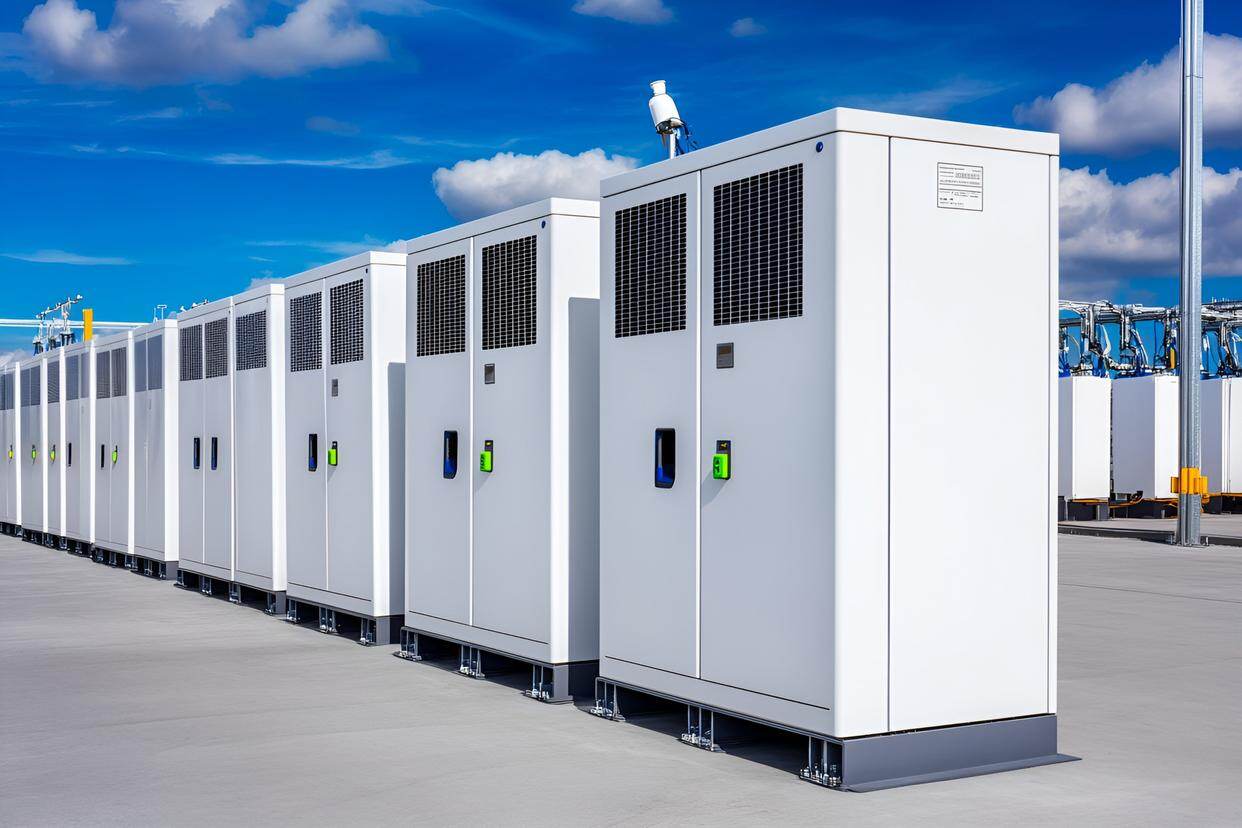
Future Energy | 2025 Analysis of China's New Energy Storage Industry
In the latter half of the 14th Five-Year Plan, China's new energy storage market saw continued growth in installed capacity. As of 2024 12, 31, cumulative installed capacity reached 78.5 GW / 185.7 GWh. New installations in 2024 reached 42.5 GW / 107.1 GWh, representing a year-over-year increase of 109.5% (based on energy capacity), accounting for 57.7% of total cumulative capacity. Both the volume and growth rate of annual new installations exceeded expectations.

Analysis and Outlook on Global Ocean Freight Market Trends for 2025
As global trade patterns shift, the maritime shipping market faces new opportunities and challenges. This article analyzes key dimensions including vessel capacity on routes and freight rate trends.

Panama Canal water levels drop; Egypt's Suez Canal loses about $0 billion
Drought driven by El Niño has caused Panama Canal water levels to drop, leading to a sharp decline in vessel transits and directly impacting global maritime efficiency. At the same time, revenue from Egypt's Suez Canal has fallen significantly due to factors such as Red Sea diversions. With both critical waterways under pressure, global shipping costs could rise, further affecting the transport of bulk commodities like coal, grain, and fertilizers.

Interpretation of New Regulations on Export and Transportation of New Energy Vehicle Batteries
This article provides a detailed analysis of the new regulations for exporting and transporting new energy vehicle batteries, along with key compliance strategies for businesses.

Cross-border E-commerce Logistics Trends: Rising Demand for FBA Services
As cross-border e-commerce continues to flourish, demand for FBA inbound shipping is rising steadily. The industry is moving toward professional, customized solutions.

Strike at 36 ports on U.S. East Coast and Gulf of Mexico is largest in 50 years
The largest port strike in over 50 years has erupted along the U.S. East Coast and Gulf of Mexico, halting operations and causing immediate logistics bottlenecks and cargo backlogs. The resulting significant rise in labor costs from the new collective bargaining agreement could also drive up ocean freight rates long-term, creating ripple effects on U.S.-China trade and global supply chains.

Huiyunda International Logistics Shenzhen Branch Grand Opening
Deepen South China presence, powering the new chapter of cross-border e-commerce expansion.

Canadian rail strike severely disrupts North American supply chains
Recently, strikes by Canadian National Railway (CN) and Canadian Pacific Kansas City (CPKC) have significantly disrupted North America's rail network. As a critical freight corridor linking Canada and the U.S., these strikes have caused cargo delays across multiple regions, extended transit times, and further destabilized supply chains in the energy, automotive, and mining sectors.

Maersk raises full-year profit forecast; Red Sea congestion exceeds expectations
Recently, the impact of Red Sea congestion on global shipping supply chains continues to unfold. Maersk has raised its full-year profit guidance, reflecting how shipping companies are adapting amid volatile freight rates, port congestion, and geopolitical risks. As a result, A-share shipping stocks rallied collectively, further boosting market attention on the reshaping of global maritime dynamics.

Houthi forces issue new navigation warning; Red Sea crisis extends beyond four months
The situation in the Red Sea remains highly uncertain. If the crisis escalates, it could lead to increased shipping costs and longer transit times.

Red Sea Crisis Escalates: Global Shipping Reroutes Around Cape of Good Hope
Global effective capacity has sharply declined, freight rates on Asia-Europe routes have surged, and supply chain disruptions are worse than at the onset of the pandemic.

Huiyunda International Logistics Guangzhou Headquarters Officially Established
Based in South China, setting a new global standard for supply chain services